Fairy Ring
[Basidiomycetes]
SYMPTOMS
The
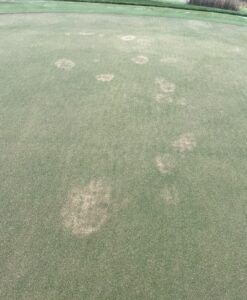
symptoms of fairy ring appear in patches, rings, or arcs that are initially 1
foot or less in diameter, but expand in size year after year, reaching up to
several hundred feet in diameter in old turf stands. Most fairy ring fungi do
not infect or parasitize the turf. Instead, growth of these fungi in the soil
can indirectly affect, or even kill, the turfgrass above. Three types of fairy
ring symptoms are observed in turfgrasses: Type I, Type II, and Type III. A
Type I fairy ring causes the soil and thatch to become hydrophobic, killing the
turf in patches, rings, or arcs. In areas affected by a Type I fairy ring, the
thatch and soil are extremely dry and repel water. Type II fairy rings appear
as rings or arcs of turf that are dark green and growing more quickly than the
surrounding turf. In a Type III fairy ring, mushrooms or puffballs are produced
in a ring or arc. The type of symptom expressed by a fairy ring may change
during the year according to weather conditions. Type III fairy ring symptoms
are more prevalent during extended periods of wet weather. Type I and Type II
fairy ring symptoms are most common during hot, dry weather in the summer.
|
fairy ring puffballs
|
Characteristic
|
Description
|
|
Host
Grass Species
|
all
|
|
Month(s)
with symptoms
|
all
|
|
Stand
Symptoms
|
patches
(1 to 3 feet), rings
|
|
Foliar
Symptoms - Location/Shape
|
dieback
from leaf tip, no distinct leaf symptoms
|
|
Foliar
Symptoms - Color
|
tan,
yellow, orange
|
|
Root/Crown
Symptoms
|
none
|
|
Fungal
Signs
|
mushrooms,
puffballs, or none
|
Note: Still not
sure if this is the right disease? The Turfgrass Disease
Identification program may be helpful. Or consult the experts at the Turf
Diagnostics Lab. Check the TurfFiles glossary for definitions
of unfamiliar terms.
FACTORS
AFFECTING DISEASE DEVELOPMENT
Fungi that cause fairy rings are
common inhabitants of forested areas. These fungi begin growing on a source of
organic matter, such as an old stump, waste lumber, or dead tree roots in the
soil. Once established, the turf produces thatch and organic matter, which
provides a source of food for continued expansion of the fairy ring.
On golf course putting greens,
fairy rings are often observed spreading into the root zone mix from the
surrounding native soil. Mushroom fungi are also prolific spore producers and
may be spread into putting greens by wind, water, or other means.
Type I fairy rings are most
damaging to turf and are encouraged by drought stress, inadequate irrigation,
and infrequent aerification.
Type II fairy ring symptoms are a
result of the release of nitrogen and other nutrients into the soil as organic
matter is degraded by the fairy ring fungi. These symptoms are most evident in
turf that is deficient of nutrients, especially nitrogen and iron.
Type III fairy rings are
encouraged by over-irrigation or poor soil drainage.
CULTURAL
CONTROL
The most effective means for
control is to prevent the fairy ring fungi from becoming established in the
turf. Remove large pieces of woody material (stumps, waste lumber, and dead
tree roots) before turf is planted to prevent the establishment of fairy rings.
Landscape contractors should remove this debris around new construction sites
before seeding or sodding.
Installation of a plastic barrier
between the root zone mix and surrounding native soil may limit the spread of
fairy ring into golf course putting greens.
Power raking or vertical mowing
to remove excessive thatch will help to minimize fairy ring problems. Golf
course superintendents should regularly aerify and topdress putting greens to
prevent thatch buildup and maintain soil aeration. Avoid extremes in soil
moisture (too wet, too dry), apply nitrogen based on local University
recommendations, and ensure balanced fertility through regular soil testing.
Once a fairy ring appears, the
best management practices depend on the type of symptom that is observed. To
control a Type I fairy ring, the water-repellent thatch and soil beneath the
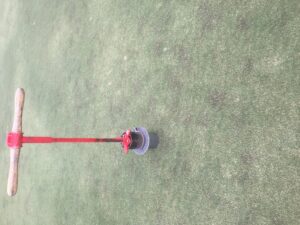
affected turf must be re-wet. Hollow-tine aerification, spiking, water-injection,
application of soil surfactants, and heavy irrigation are effective strategies
for re-wetting this hydrophobic layer. Affected areas should be hand-watered to
prevent over-watering of the unaffected turf.
Symptoms of a Type II fairy ring
can be masked with an application of nitrogen or iron. This will cause the
surrounding turf to green-up, making the affected turf less evident. Collect
soil or tissue samples for nutrient analysis from the turf immediately
surrounding the Type II fairy rings, and correct any nutrient imbalances as
recommended. Use caution when applying nitrogen to mask Type II fairy ring
symptoms on cool-season grasses during the summer. Too much nitrogen may
over-stimulate the grass and lead to the development of more serious diseases.
In this case, iron should be used to increase turf color without causing
excessive foliar growth.
Drastic methods for control of
fairy rings, such as soil fumigation, removal of infested soil, or turf
renovation by tilling and mixing the soil may be effective in the short-term,
but the fairy rings usually become re-established over a period of years.
CHEMICAL
CONTROL
Over 60 species of fungi have
been associated with fairy ring symptoms in turfgrasses, and these species
likely vary in their sensitivity to fungicides. Control of fairy rings with
fungicides is a site-specific venture for this reason. Turfgrass managers should
experiment with different products to identify those that will control the
disease in their location.
Fungicides are most effective for
fairy ring control when used on a preventative basis. Curative applications
have little effect because the symptoms are caused by a change in the soil
environment, and fungicides do nothing to change the soil. A preventative
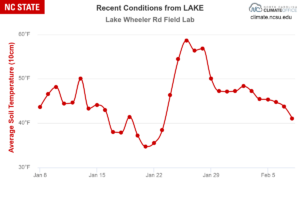
fungicide program should be initiated in the spring when mean daily soil
temperatures are consistently above 55°F. Regular use of soil surfactants will
help to maintain uniform soil moisture and may reduce the appearance of Type I
fairy ring symptoms.
Because fairy ring fungi are in
the thatch and soil, fungicides must be watered-in or applied in large volumes
of water for best results. Applications in 2 gallons H2O per 1000 ft2
followed by 0.25” of irrigation have provided excellent results in research
trials at NC State University. Irrigation must be applied immediately before
the spray begins to dry on the turfgrass foliage. Tank-mixing some fungicides
with a soil penetrant may also enhance movement into the soil and improve fairy
ring control.
The DMI fungicides provide
excellent preventative control of the puffball fungi Lycoperdon perlatum
and Vascellum pratense in golf course putting greens. Two applications
on a 30 day interval, beginning in spring when 5-day average soil temperatures
reach 55°F, have provided season-long control in many cases. The DMI
fungicides, however, should not be tank-mixed with soil surfactants as this may
reduce their efficacy and increase the potential for phytotoxicity.
|
Fungicide
|
Efficacy (1)
|
Resistance Risk (2)
|
Class (3)
|
Products (4)
|
|
triadimefon
|
++++
|
2
|
DMI
|
Bayleton
|
|
metconazole
|
+++
|
2
|
DMI
|
Tourney
|
|
azoxystrobin
|
+++
|
3
|
QoI
|
Heritage
|
|
pyraclostrobin
|
+++
|
3
|
QoI
|
Insignia
|
|
azoxystrobin + propiconazole
|
+++
|
3
|
QoI + DMI
|
Headway
|
|
flutolanil
|
++
|
2
|
carboxamide
|
ProStar
|
|
flutolanil + thiophanate-methyl
|
++
|
2
|
carboxamide + benzimidazole
|
SysStar
|
|
polyoxin D
|
++
|
2
|
polyoxins
|
Endorse
|
|
|
Footnotes:
|
|
(1)
|
Efficacy Codes:
|
|
++++
|
excellent control when
conditions are highly favorable for disease development
|
|
+++
|
good control when disease
pressure is high, or excellent control when disease pressure is moderate
|
|
++
|
good control when disease
pressure is moderate, excellent control when disease pressure is low
|
|
+
|
good control when disease pressure
is low
|
|
0
|
does
not provide adequate control under any conditions
|
|
?
|
cannot be rated due to
insufficient data
|
|
(2)
|
Resistance Risk:
|
|
1
|
Rotating and tank-mixing not necessary,
but recommended to avoid potential side effects from continuous use of same
chemical class.
|
|
2
|
Rotate to different chemical
class after 3-4 applications; tank-mixing not necessary.
|
|
3
|
Rotate to different chemical class
after 2-3 applications; tank-mixing not necessary.
|
|
4
|
Rotate to different chemical
class after 1-2 applications; tank-mixing not necessary.
|
|
6
|
Rotate to different chemical
class after 1-2 applications; tank-mixing with low or moderate risk product
recommended.
|
|
9
|
Rotate to different chemical
class after EVERY application; tank-mix with low or moderate risk product for
EVERY application.
|
|
(3)
|
Continual use of fungicides
with similar control mechanisms (modes of action) can result in fungi that
are resistant to some chemicals. Poor or ineffective disease control can be
expected when this occurs. Managers can reduce the chances of this happening
by mixing or alternating fungicides belonging to different chemical classes.
|
|
(4)
|
Recommendations of specific
chemicals are based upon information on the manufacturer's label and
performance in a limited number of trials. Because environmental conditions and
methods of application may vary widely, performance of the chemical will not
always conform to the safety and pest control standards indicated by
experimental data. When more than one brand name exists for an agricultural
chemical, the name of brand that first came onto the market is listed first.
Otherwise, brand names are listed in alphabetical order. The order in which
brand names are given is not an indication of a recommendation or criticism.
|
|
Recommendations for the use of
agricultural chemicals are included in this publication as a convenience to
the reader. The use of brand names and any mention or listing of commercial
products or services does not imply endorsement by North Carolina State University or discrimination against similar products or services not mentioned. Other
brand names may be labeled for use on turfgrasses. Individuals who use
agricultural chemicals are responsible for ensuring that the intended use
complies with current regulations and conforms to the product label. Be sure
to obtain current information about usage regulations and examine a current
product label before applying any chemical. For assistance, contact your
county's Cooperative Extension agent.
|
© North Carolina
State University. This information sheet was prepared by Lane P. Tredway, Gail
G. Wilkerson, Bridget R. Lassiter, Jenifer J. Reynolds, and Gregory S. Buol.
Departments of Plant Pathology and Crop Science, College of Agriculture &
Life Sciences, North Carolina State University. Prepared March
23, 2009. Available on-line at www.turffiles.ncsu.edu. This publication was
made possible through a grant provided by the Center for Turfgrass
Environmental Research & Education (CENTERE) whose purpose is to support
worthwhile projects that will benefit both the private sector and the public,
and protect the environment.