Description
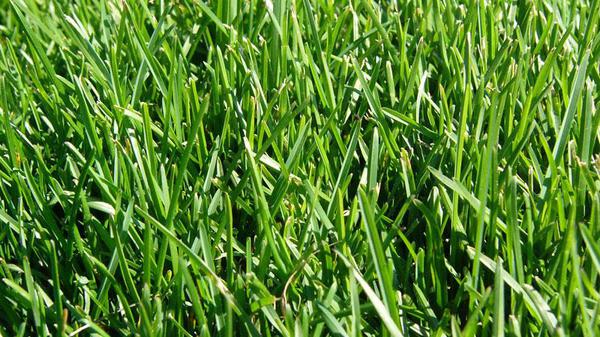
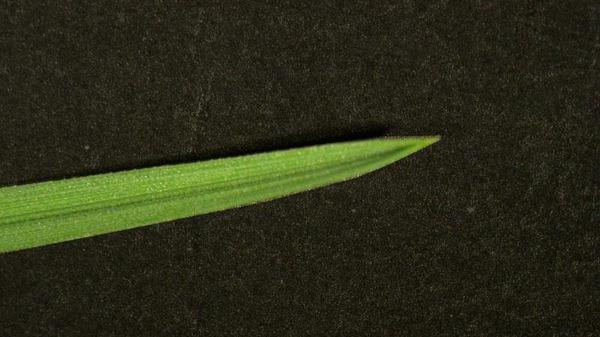
Kentucky bluegrass (Poa pratensis) is the second most widely grown cool-season species in North Carolina because it has a dark green color, a medium to fine texture, and, due to its aggressive rhizome system, can recover from stresses. It prefers fertile, well-limed soils and full sun to moderate shade. Kentucky bluegrass is often mixed with other cool-season grasses like tall fescue to enhance the ability of the turfgrass stand to recover from stresses. Kentucky bluegrass is often confused with tall fescue and/or perennial ryegrass. However, Kentucky bluegrass has a boat-shaped leaf tip and distinctive light-colored lines on both sides of the midrib.
Lawn Maintenance, Athletic Field Maintenance and Cultivar Selection
- For a month-by-month Kentucky bluegrass lawn maintenance calendar, see Tall Fescue and Kentucky Bluegrass Home Maintenance Calendar.
- For guidance on maintaining athletic fields, see Athletic Field Maintenance Calendar.
- 2020 Top Performing Tall Fescue and Kentucky Bluegrass Cultivars Across the Transition Zone and North Carolina
Species Data
- SEEDHEAD / FLOWER
- seedhead is an open panicle. spikelets are flattened, with 3-5 seeds each.
- VERNATION TYPE
- leaves folded in the bud
- LIGULE TYPE
- membranous; very short, collar-like, 0.008 - 0.04 inches (0.2 - 1 mm) long
Figure 1
- membranous; very short, collar-like, 0.008 - 0.04 inches (0.2 - 1 mm) long
- GROWTH SEASON / LIFE CYCLE
- cool season turf
- AURICLE TYPE
- absent
- LEAF BLADE TIP SHAPE
- LEAF BLADE WIDTH
- 0.08 - 0.16 inches (2 - 4 mm) wide
- STOLON PRESENCE
- absent
- RHIZOME PRESENCE
- present
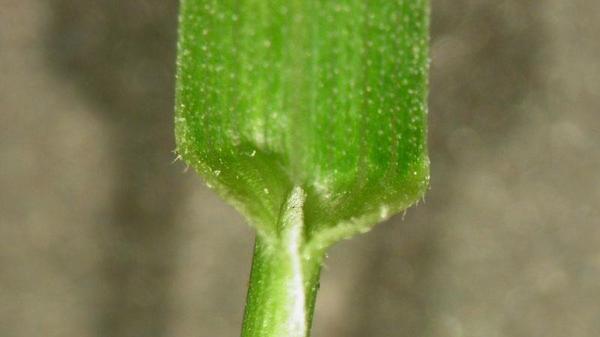
- COLLAR TYPE
- slightly divided by midrib, may have fine hair on edge
Figure 4
- slightly divided by midrib, may have fine hair on edge
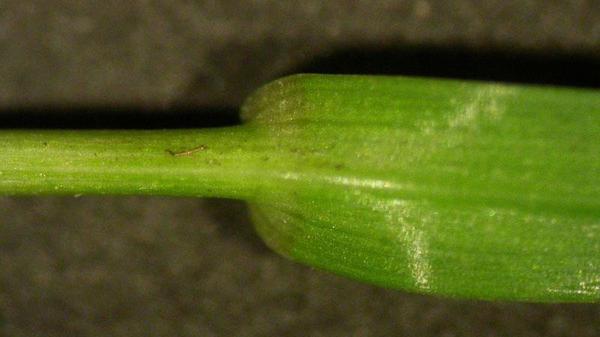
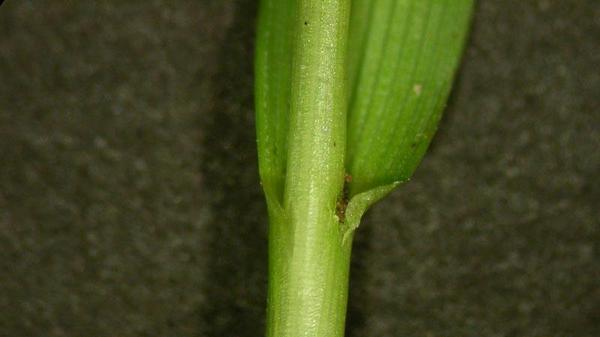
- SHEATH MARGIN
- closed, but splits with maturity
Figure 5
- closed, but splits with maturity
This Extension publication can also be viewed at: https://content.ces.ncsu.edu/kentucky-bluegrass