Description
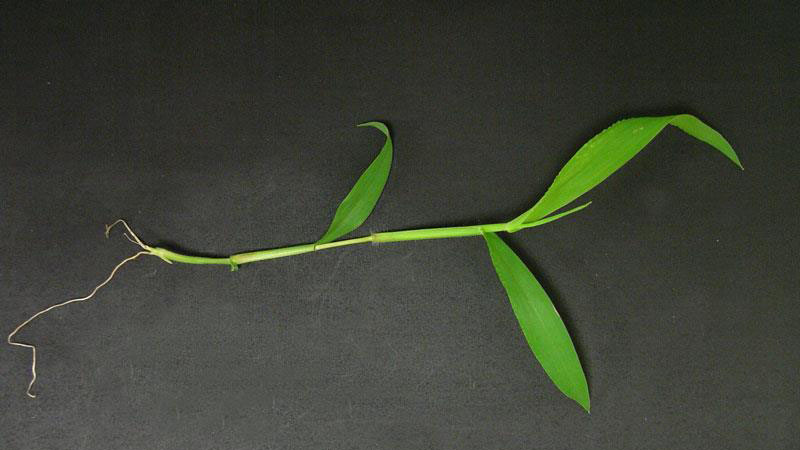
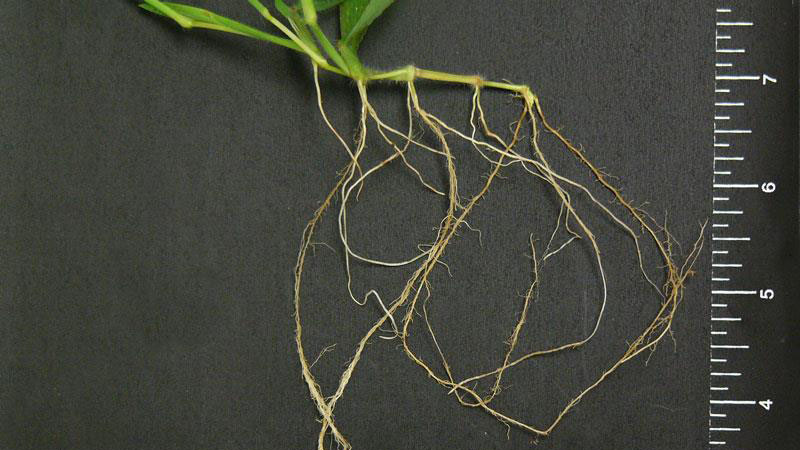
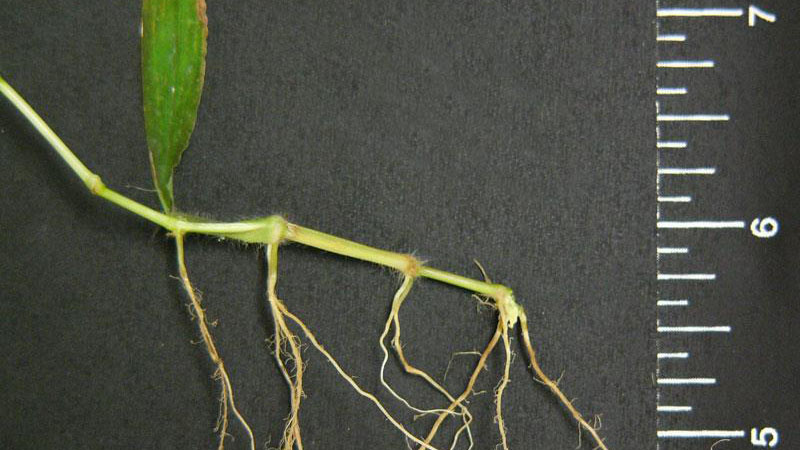
Large crabgrass (Digitaria sanguinalis), also called hairy crabgrass, is a common weed in turfgrass situations, and can germinate from March through early May in North Carolina when soil temperatures reach 53 to 58°F at a 4-inch depth. This weed is found in a variety of habitats. Germination of this weed is encouraged by the alternating dry and wet conditions at the soil surface in the spring. Stems have a prostrate growth habit and may root at the lower nodes. Large crabgrass is similar to smooth crabgrass. However, the leaf blade of smooth crabgrass is not as hairy, with a few hairs near the base of the blade. Leaf blade edges of smooth crabgrass are either not hairy or have sparse hairs.
Cultural Control
Crabgrass will grow under close mowing conditions. Competition is enhanced by thin open turfgrass stands, improper mowing heights for the desired turf, summer fertilization, and light, frequent irrigation. For crabgrass control, practice procedures outlined to maintain a dense, actively growing turf.
Species Data
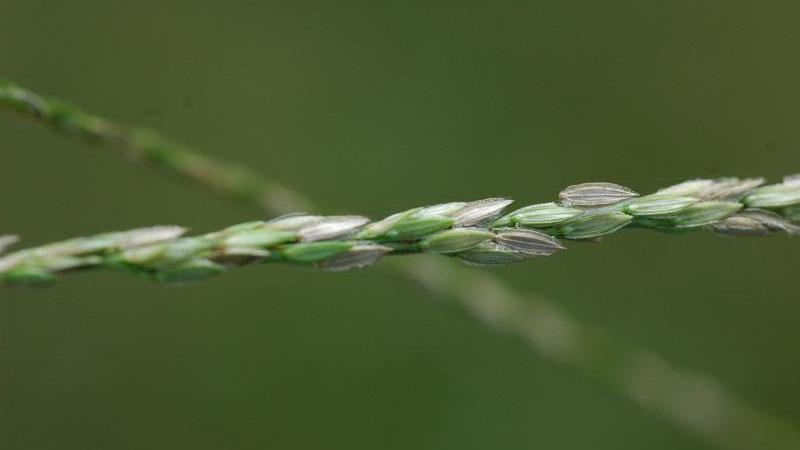
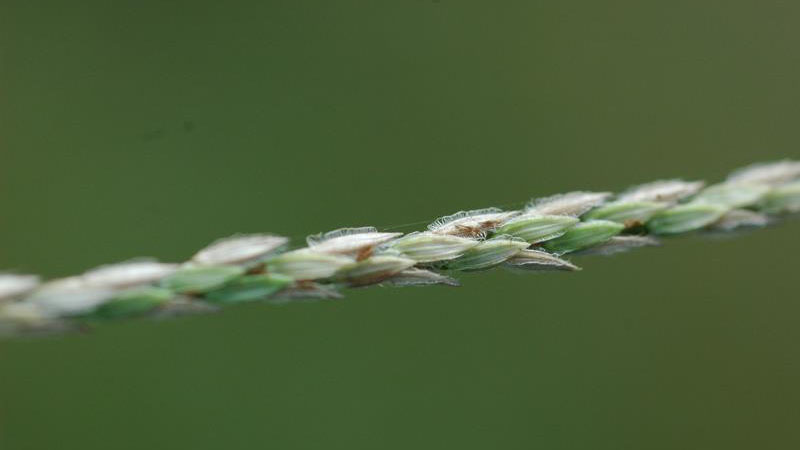
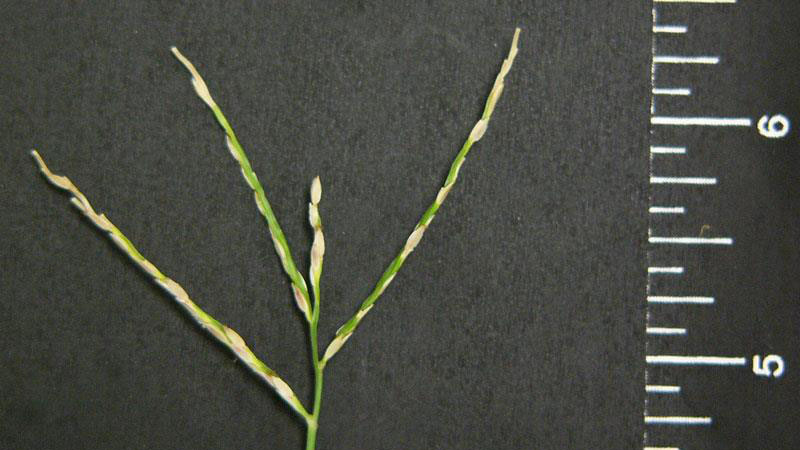
- SEEDHEAD / FLOWER
- VERNATION TYPE
- leaves rolled in the bud
Figure 4
- leaves rolled in the bud
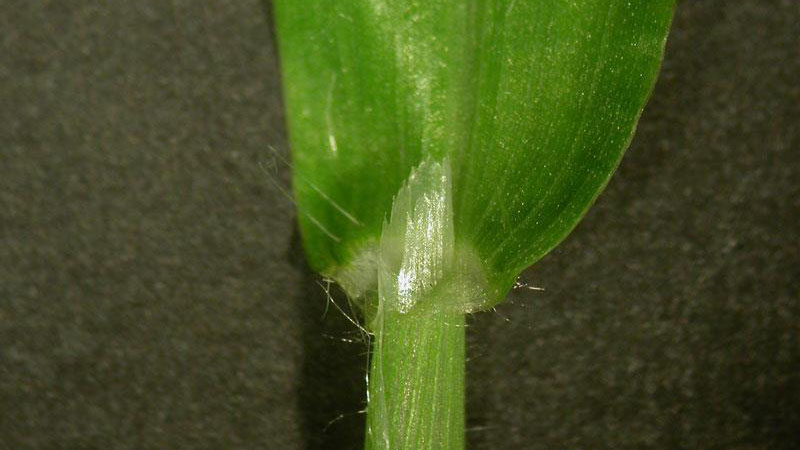
- LIGULE TYPE
- membranous; 0.04 - 0.08 inches (1 - 2 mm) long, rounded to sharp pointed, toothed, often reddish
Figure 5
- membranous; 0.04 - 0.08 inches (1 - 2 mm) long, rounded to sharp pointed, toothed, often reddish
- GROWTH SEASON / LIFE CYCLE
- summer annual weed
- AURICLE TYPE
- absent
Figure 6
- absent
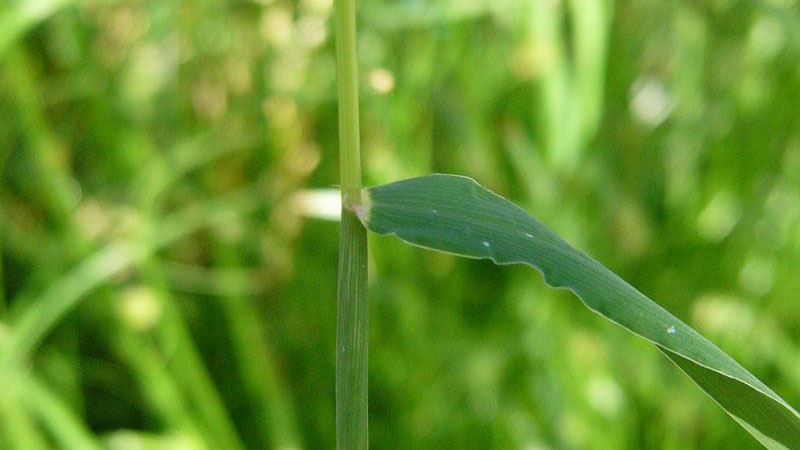
- LEAF BLADE TIP SHAPE
- sharp-pointed; covered with short hairs on both surfaces, sharply creased below, edges rough with scattered hairs
Figure 8
- sharp-pointed; covered with short hairs on both surfaces, sharply creased below, edges rough with scattered hairs
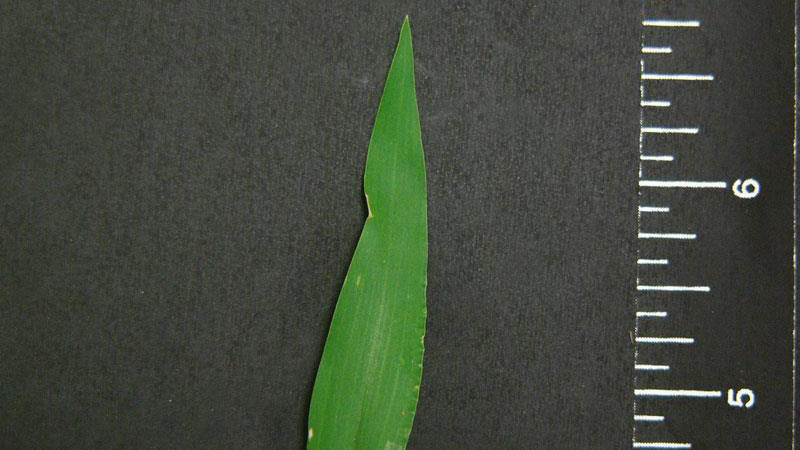
- LEAF BLADE WIDTH
- 0.2 - 0.6 inches (5 - 15 mm) wide
Figure 7
- 0.2 - 0.6 inches (5 - 15 mm) wide
- STOLON PRESENCE
- RHIZOME PRESENCE
- absent
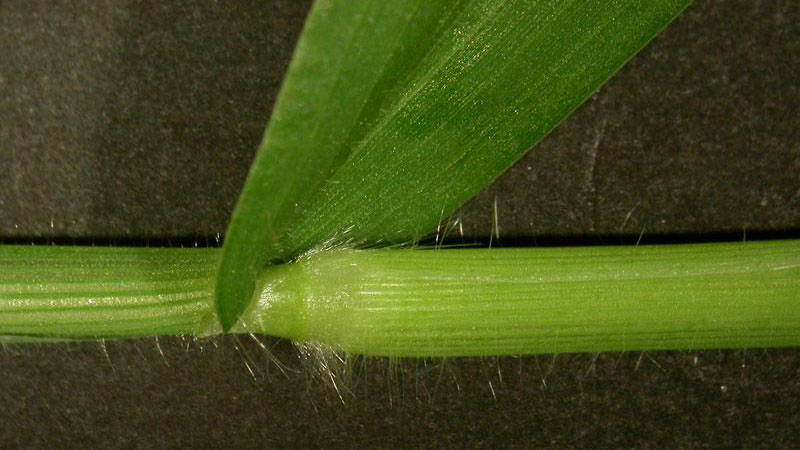
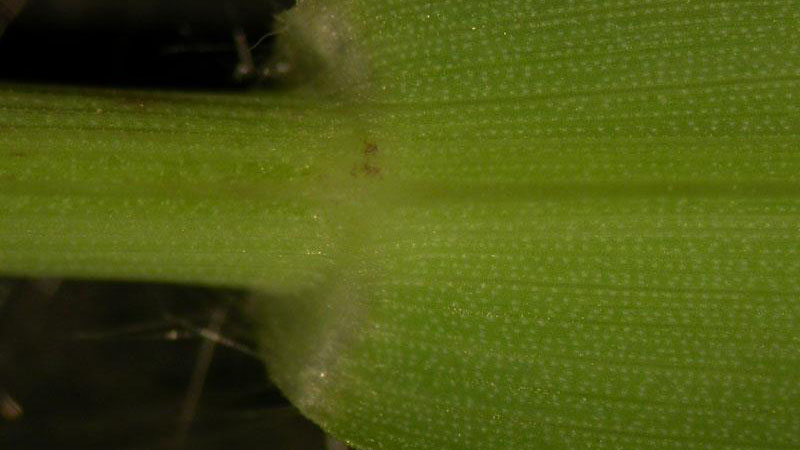
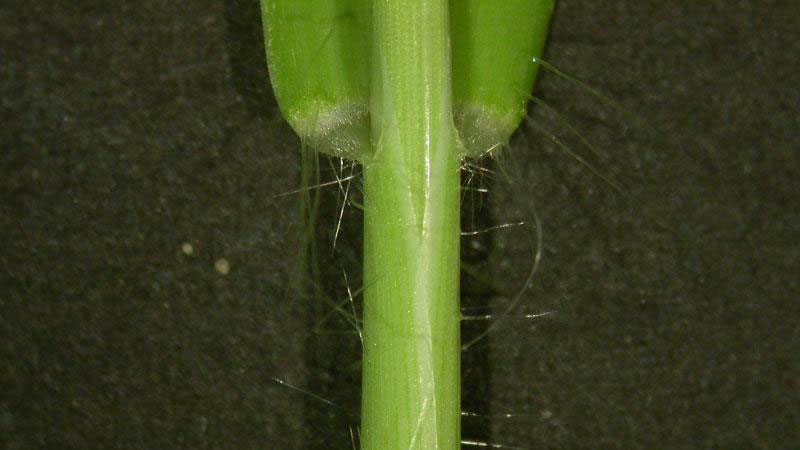
- COLLAR TYPE
- indistinct, mostly divided, hairy edges
Figure 11, Figure 12
- indistinct, mostly divided, hairy edges
- SHEATH MARGIN
- open
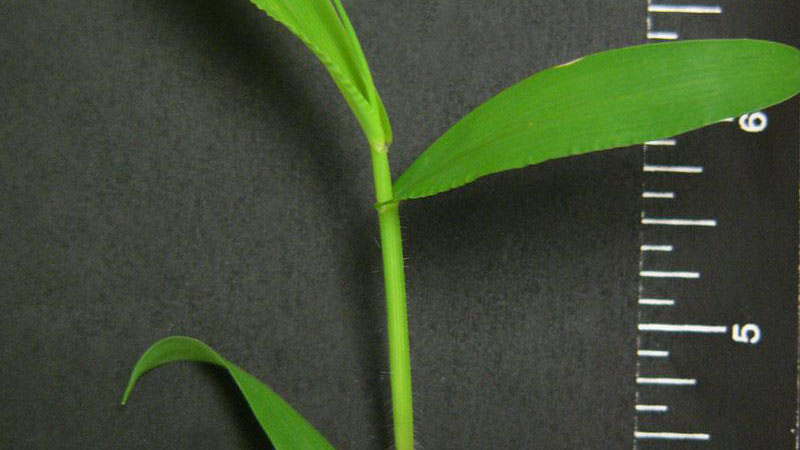
- SHEATH TYPE
- flattened; sheath has long hairs; often with purple veins
Figure 13
- flattened; sheath has long hairs; often with purple veins
This Extension publication can also be viewed at: https://content.ces.ncsu.edu/large-crabgrass