Description
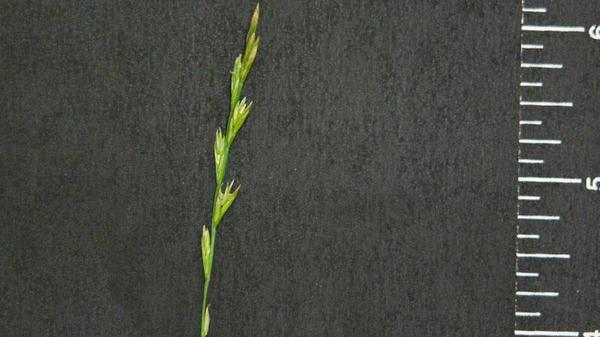
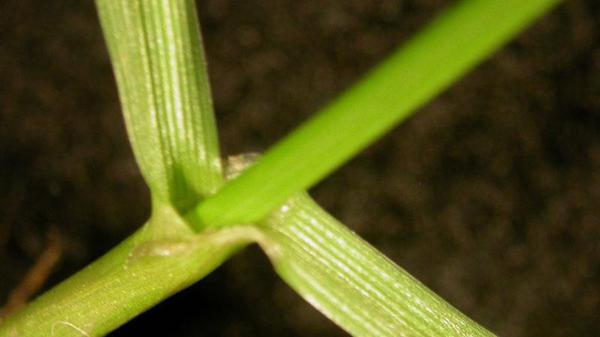
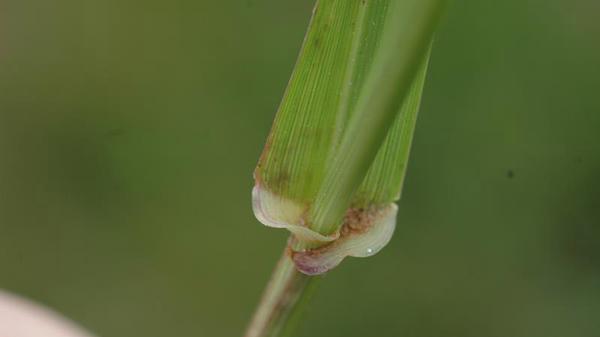
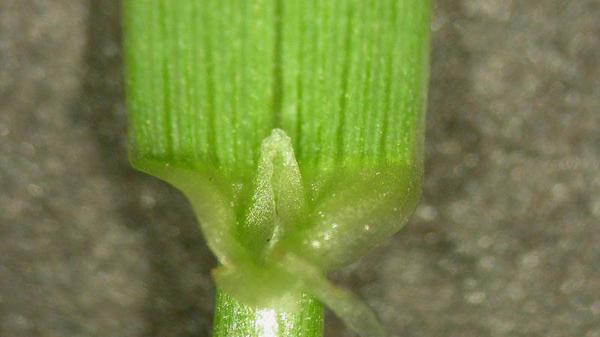
Annual ryegrass (Festuca perennis), also referred to as Italian ryegrass, is a bunch-type grass that can be used as a nurse crop for quick cover or for winter overseeding of bermudagrass on low maintenance athletic fields or golf courses. It does not possess the quality of perennial ryegrass and is not recommended for sites where high quality turf is desired. However, it is very inexpensive and can be used on low profile fields such as school, park or recreation sites where winter color is desirable. Its seedhead can be confused with that of quackgrass. Annual ryegrass does not have rhizomes, whereas quackgrass does. Annual ryegrass can be easily confused with tall fescue. However, tall fescue has rough leaf blade margins on the lower 1⁄3 - 1⁄2 of the leaf whereas annual ryegrass has smooth ones. Tall fescue has non-clasping auricles, whereas annual ryegrass has clasping auricles. The backside of the tall fescue leaf blade is less glossy than that of annual ryegrass.
Annual Ryegrass as a Weed
Cultural Control
Annual ryegrass is a common weed problem in turfgrasses on roadsides in the southeastern United States. Maintaining a dense, vigorous turf is the first step in effective weed control. Cultural and management practices that enhance turfgrass growth generally reduce weed competition and encroachment. First, select adapted turfgrass cultivars for your area and then properly fertilize, mow, and water to encourage dense growth.
Species Data
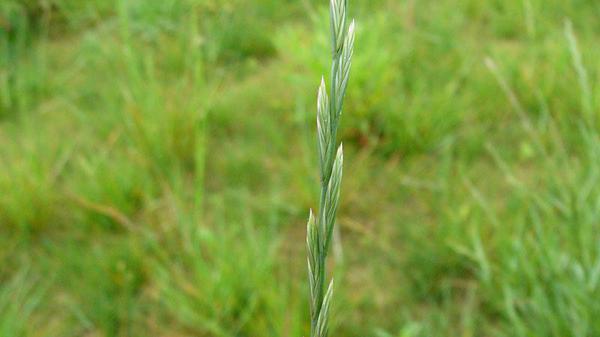
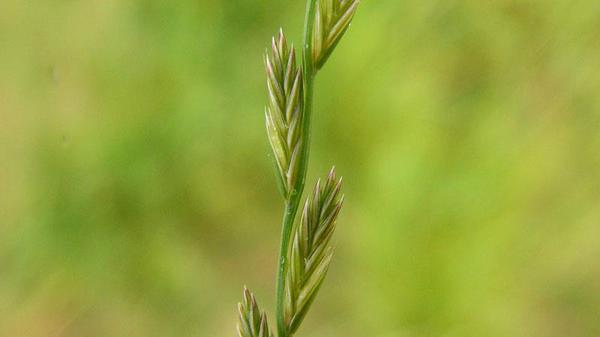
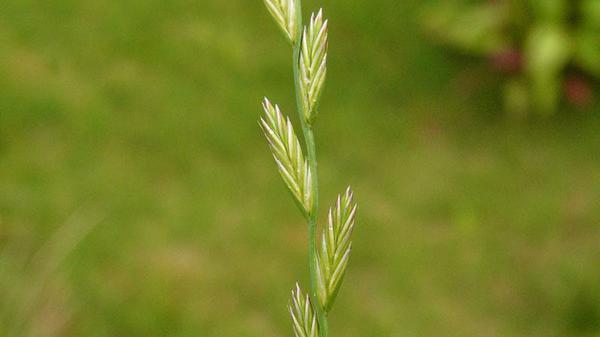
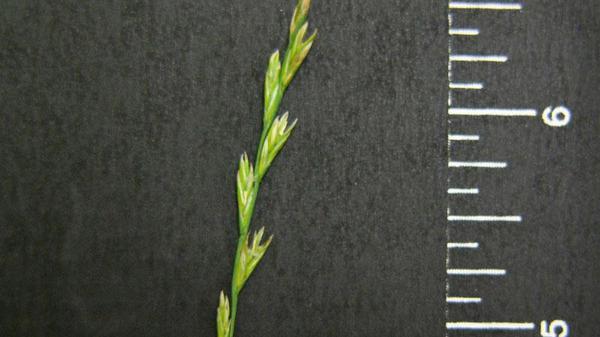
- SEEDHEAD / FLOWER
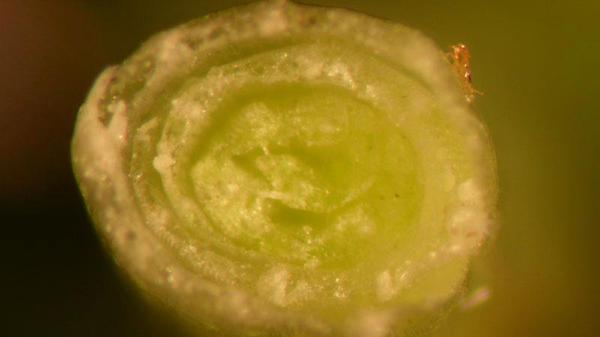
- VERNATION TYPE
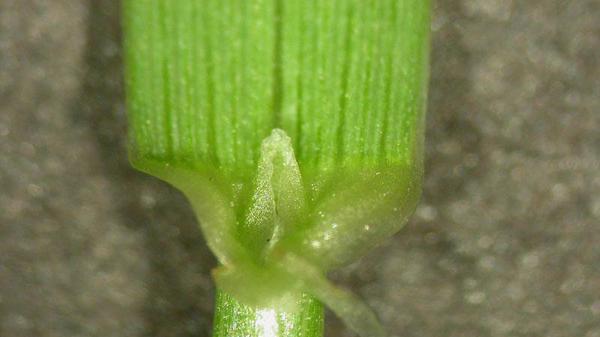
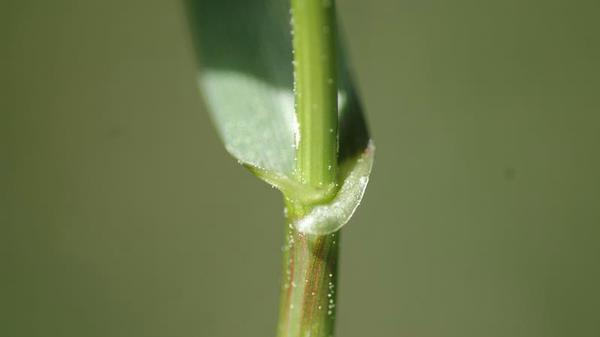
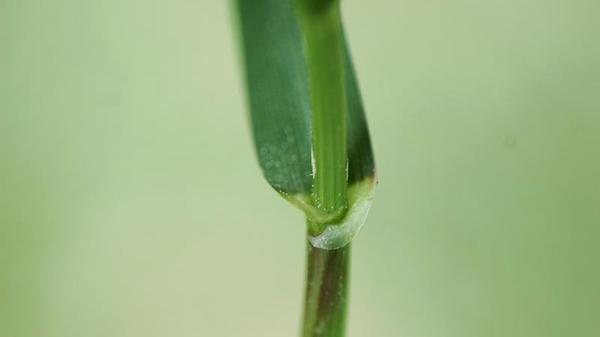
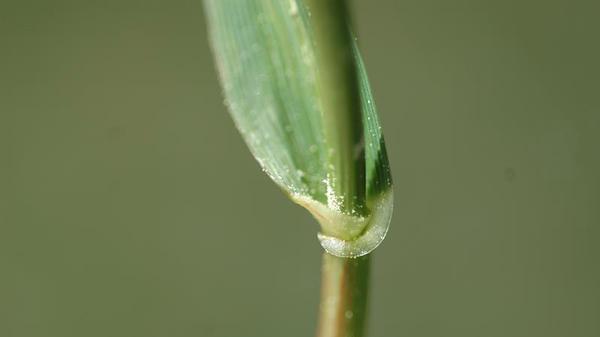
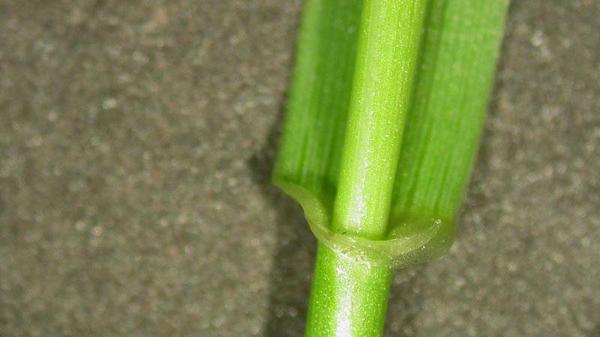
- LIGULE TYPE
- membranous; blunt, 0.04 - 0.08 inches (1 - 2 mm) long
Figure 8
- membranous; blunt, 0.04 - 0.08 inches (1 - 2 mm) long
- GROWTH SEASON / LIFE CYCLE
- cool season turf or annual weed
- AURICLE TYPE
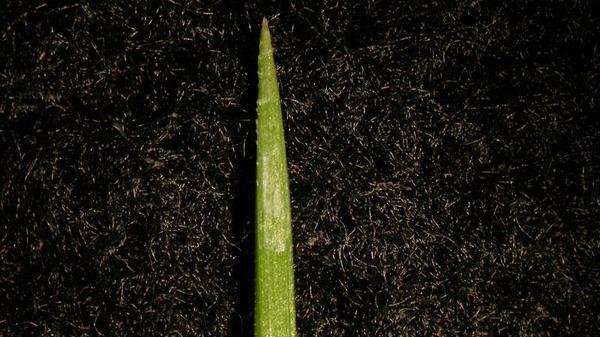
- LEAF BLADE TIP SHAPE
- sharp-pointed; bright green, upper surface dull, deeply ridged, lower surface smooth, glossy and slightly creased, edges smooth
Figure 15
- sharp-pointed; bright green, upper surface dull, deeply ridged, lower surface smooth, glossy and slightly creased, edges smooth
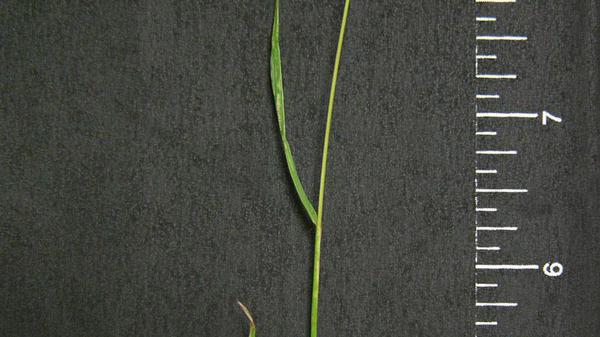
- LEAF BLADE WIDTH
- 0.1 - 0.28 inches (3 - 7 mm) wide
Figure 16
- 0.1 - 0.28 inches (3 - 7 mm) wide
- STOLON PRESENCE
- absent
- RHIZOME PRESENCE
- absent
- COLLAR TYPE
- continuous; indistinct, not hairy
- SHEATH MARGIN
- split with overlapping margins
- SHEATH TYPE
- round; pinkish at the base
This Extension publication can also be viewed at: https://content.ces.ncsu.edu/annual-ryegrass