Description
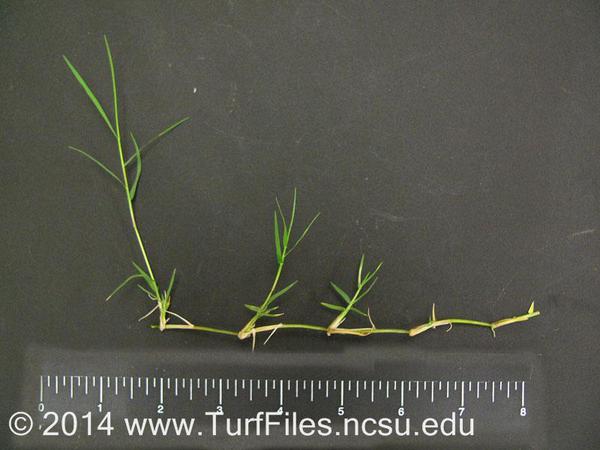
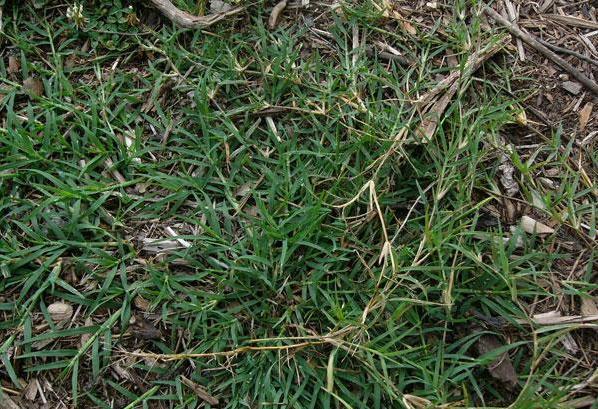
Bermudagrass (Cynodon species) is a medium- to fine-textured warm-season turfgrass that spreads by rhizomes and stolons. It has excellent heat, drought, and salt tolerance but does not do well in shade. Bermudagrass is the most widely used species on athletic fields and golf course fairways / tee boxes due to its high wear tolerance and rapid recovery. It can also be a very invasive and hard to control weed in some turf settings. Bermudagrass can be confused with nimblewill. However, nimblewill has a membranous ligule, which can be distinguished from the hairy ligule of Bermudagrass. Bermudagrass is also often confused with zoysiagrass, but zoysiagrass has hairs standing upright on the leaf blade, whereas Bermudagrass does not. Zoysiagrass is also stiff to the touch and offers more resistance to your hand than Bermudagrass. Zoysiagrass leaf vernation is rolled whereas Bermudagrass leaf vernation is folded. There are many different hybrids of Bermudagrass that range from fine to coarse in leaf texture. As a weed, Bermudagrass is sometimes referred to as wiregrass.
Lawn and Athletic Field Maintenance
- For a month-by-month Bermudagrass lawn maintenance calendar, see Bermudagrass Lawn Maintenance Calendar, AG-431
- For a month-by-month Bermudagrass athletic field maintenance calendar, see Bermudagrass Athletic Field Maintenance Calendar, AG-429
Bermudagrass as a Weed
Cultural Control
Most turfgrasses are difficult to control within another turfgrass. Therefore, turf managers should select clean seed or vegetative sources for establishment, use an adapted turfgrass species and cultivar for their location, and use proper mowing and fertilization techniques to maintain a dense, actively growing, desired turf. Digging or removal with hand or mechanical equipment, for example a sod cutter, is one way to control undesired perennial turfgrasses. You may spot treat an infested area with an appropriate non-selective herbicide, realizing it will also kill the desired turfgrass.
Species Data
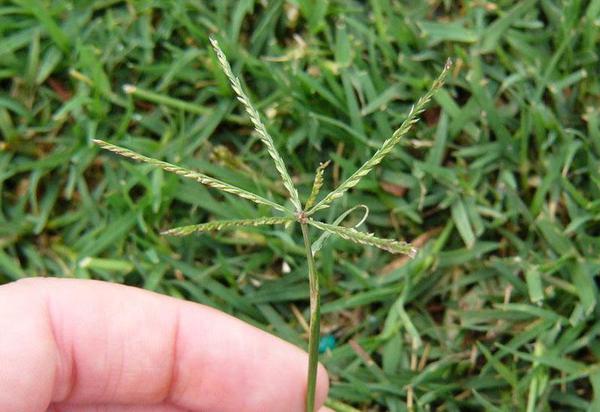
- SEEDHEAD / FLOWER
- raceme; 3-5 spikes that join at the top of a main stem
Figure 1
- raceme; 3-5 spikes that join at the top of a main stem
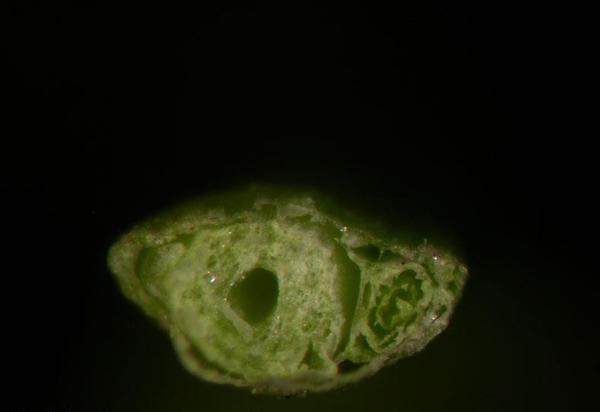
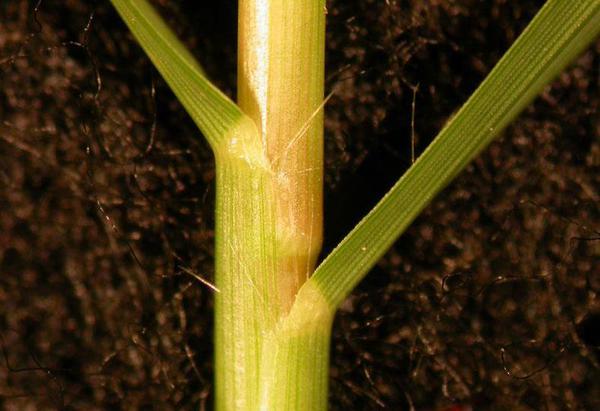
- VERNATION TYPE
- leaves folded in the bud
Figure 2
- leaves folded in the bud
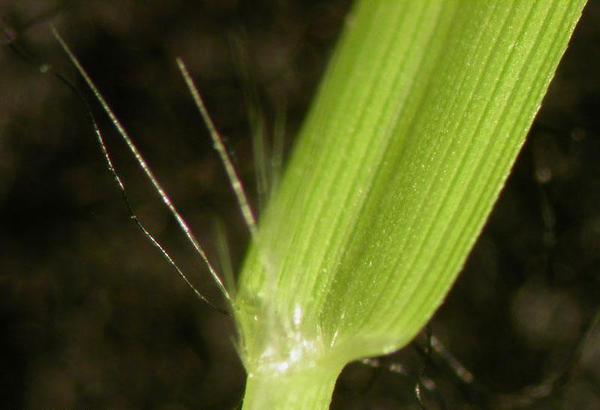
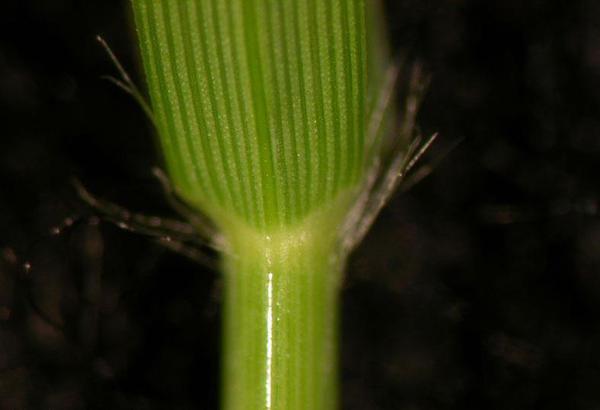
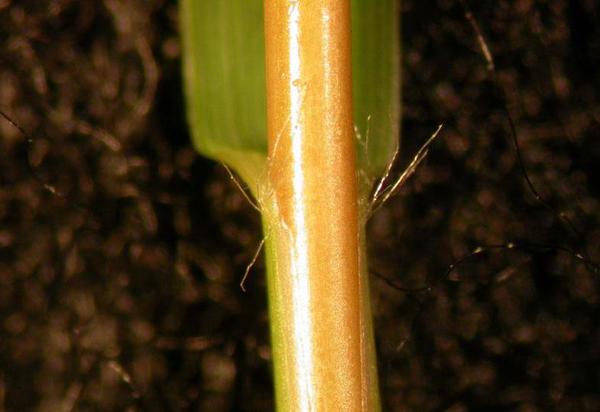
- LIGULE TYPE
- fringe of hairs 0.04 - 0.12 inches (1 - 3 mm) long
Figure 3
- fringe of hairs 0.04 - 0.12 inches (1 - 3 mm) long
- GROWTH SEASON / LIFE CYCLE
- warm season turf or perennial weed
- AURICLE TYPE
- absent
Figure 3
- absent
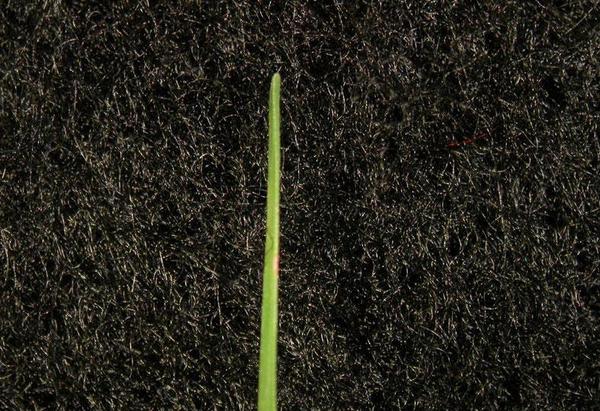
- LEAF BLADE TIP SHAPE
- sharp-pointed; sparsely hairy, edges rough, leaf blade soft
Figure 4
- sharp-pointed; sparsely hairy, edges rough, leaf blade soft
- LEAF BLADE WIDTH
- 0.06 - 0.1 inches (1.5 - 3 mm) wide
- STOLON PRESENCE
- RHIZOME PRESENCE
- present; stout
- COLLAR TYPE
- SHEATH MARGIN
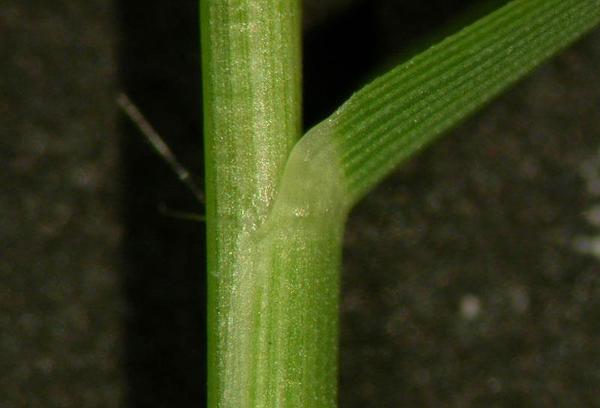
- SHEATH TYPE
- sheath is sparsely hairy; flattened to round, loose
Figure 7
- sheath is sparsely hairy; flattened to round, loose

This Extension publication can also be viewed at: https://content.ces.ncsu.edu/bermudagrass