Description
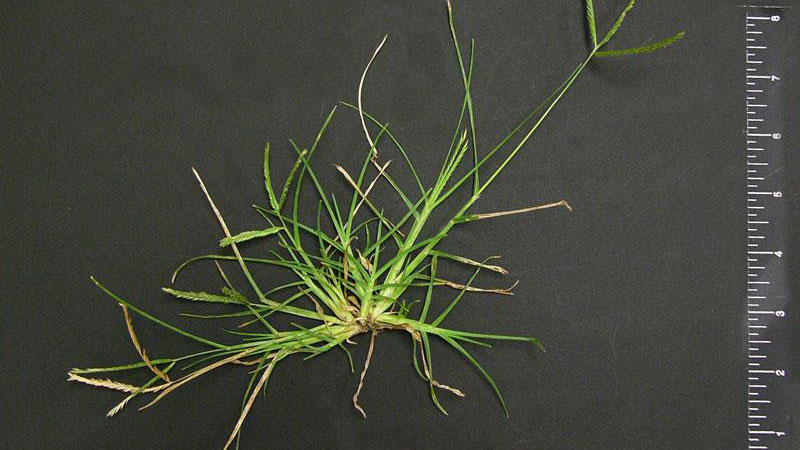
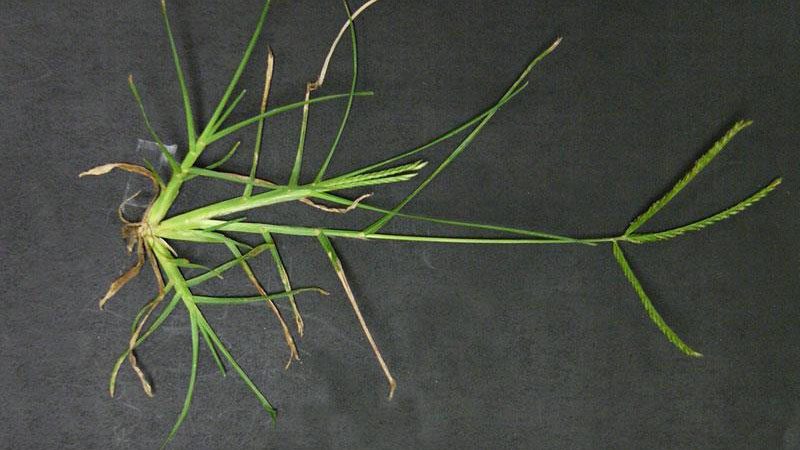
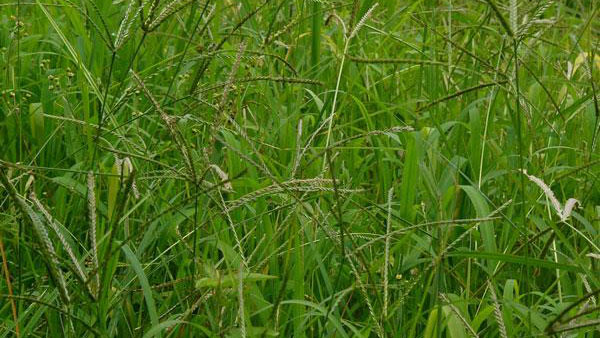
Goosegrass (Eleusine indica) is a very troublesome grassy weed in athletic fields, golf greens, tees and fairways, and in other turfgrasses that are mowed short. It germinates when soil temperatures reach 60 to 65°F, and requires moisture and light for germination. Goosegrass has a prostrate growth habit, and is often white in the center with a wagon-wheel like appearance. Unlike crabgrass, it does not root at the nodes, but grows well in compacted soils. It competes very successfully with warm-season and cool-season turfgrasses during summer months and is most competitive in thin, open turfs and turfs subject to intense traffic or use.
Cultural Control
Goosegrass is most competitive in thin, open turfs and turfs subject to intense traffic or use. Close mowing and frequent watering enhance goosegrass competition. It is a very troublesome weed in athletic fields, golf greens, tees and fairways and other turfgrasses that are mowed short. Goosegrass germinates when soil temperatures reach 60°F, which is usually at least two weeks later than crabgrass. It competes very successfully with warm-season and cool-season turfgrasses during summer months. A severe goosegrass infestation may indicate the need for aerification to alleviate compaction.
Species Data
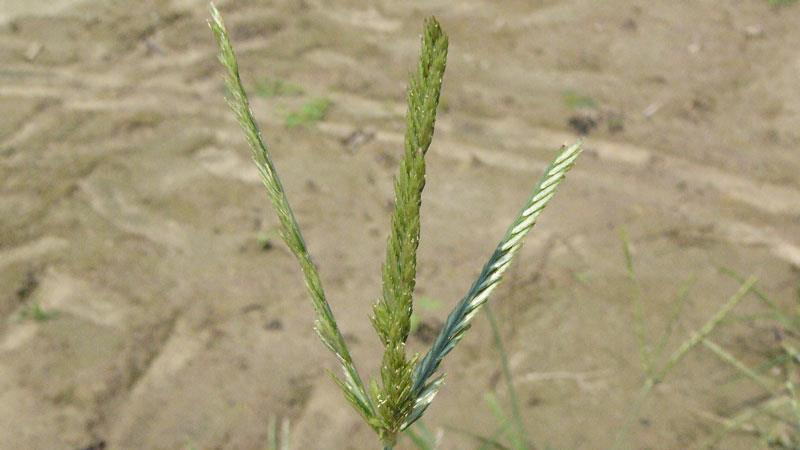
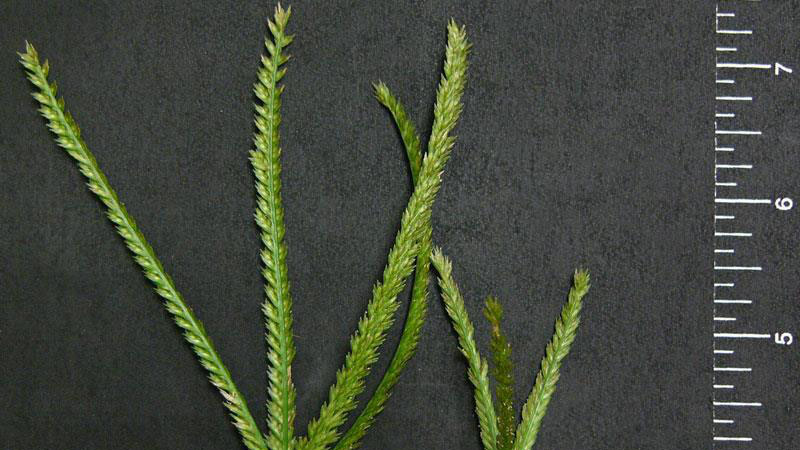
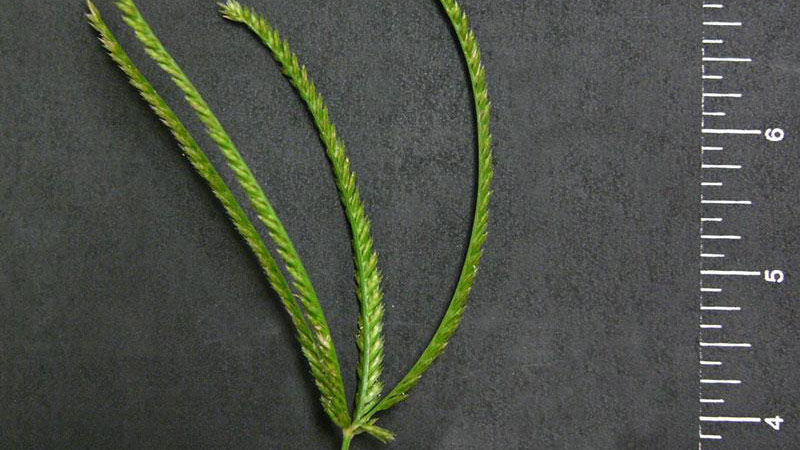
- SEEDHEAD / FLOWER
- VERNATION TYPE
- folded
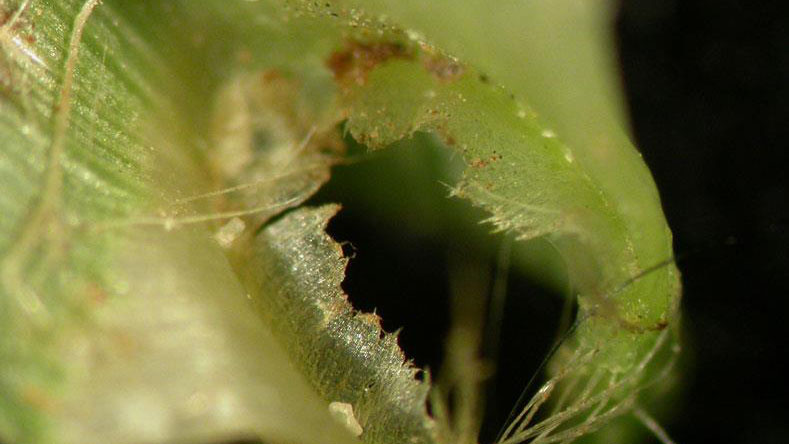
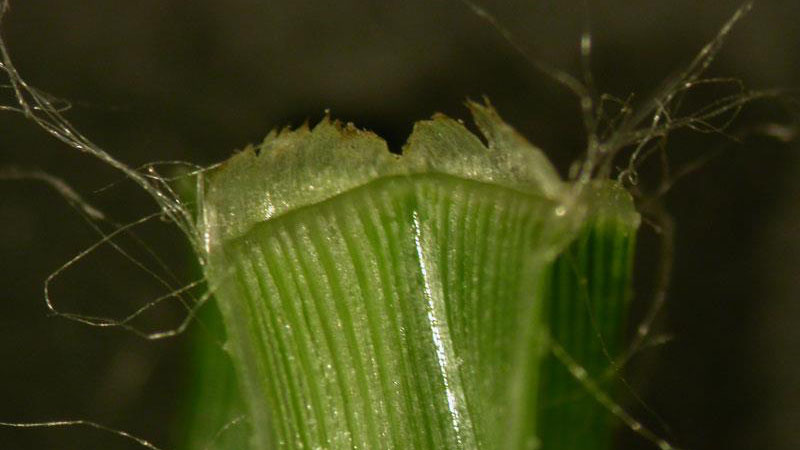
- LIGULE TYPE
- GROWTH SEASON / LIFE CYCLE
- summer annual weed
- AURICLE TYPE
- absent
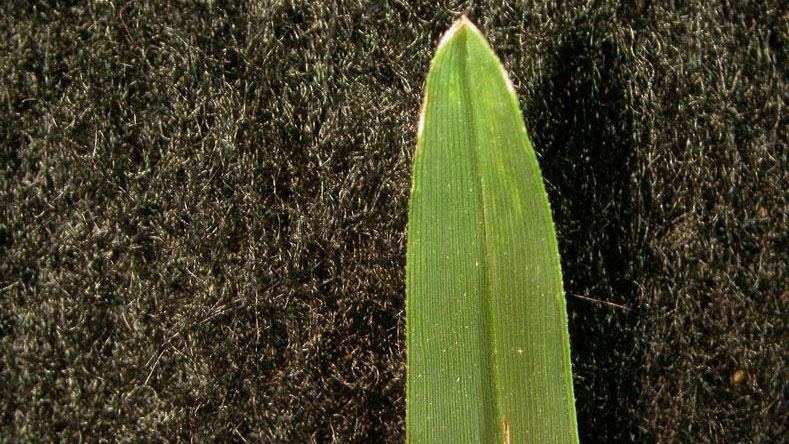
- LEAF BLADE TIP SHAPE
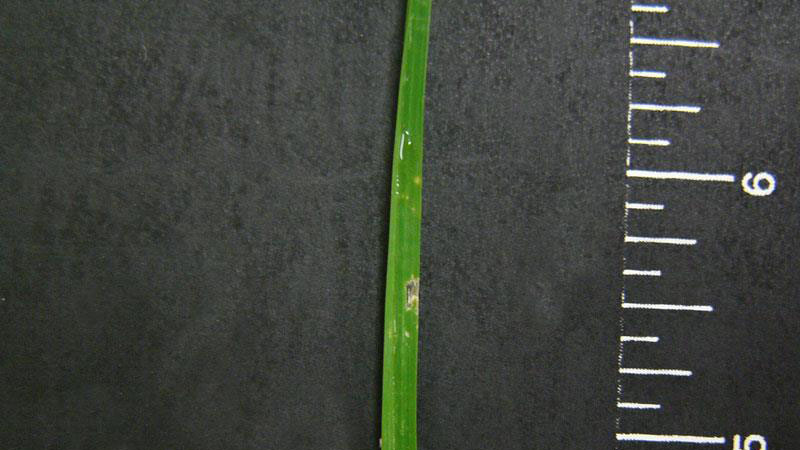
- LEAF BLADE WIDTH
- 0.2 - 0.4 inches (5 - 10 mm) wide
- STOLON PRESENCE
- absent
- RHIZOME PRESENCE
- absent
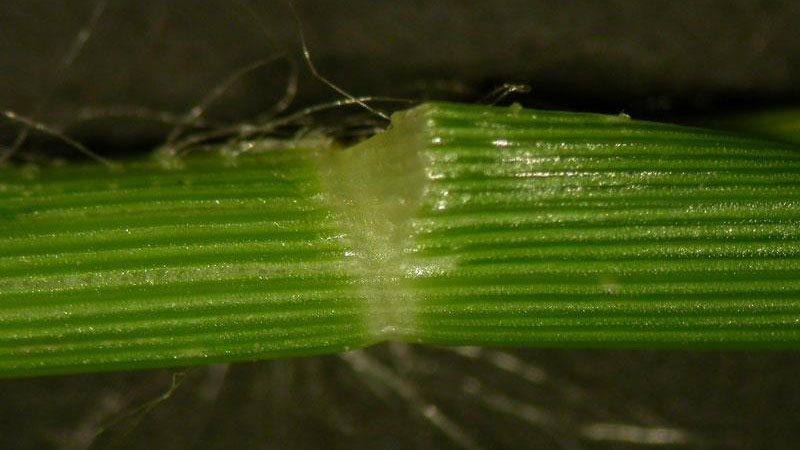
- COLLAR TYPE
- SHEATH MARGIN
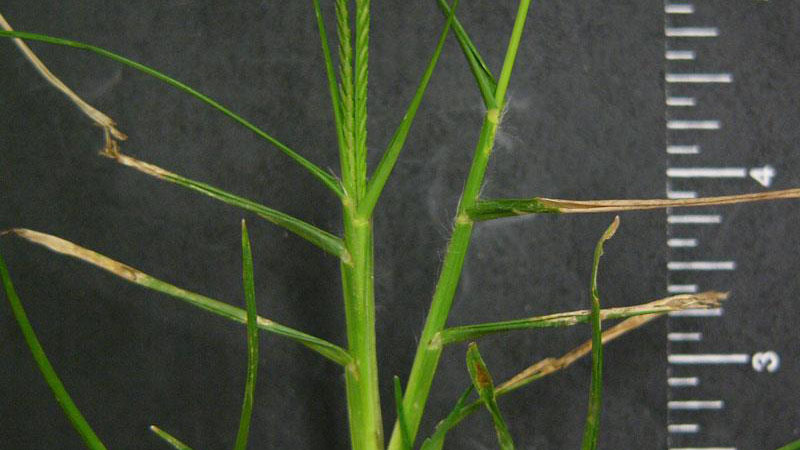
- split with overlapping margins; sheath is hairy at top, edges may have hairs
Figure 16, Figure 17, Figure 18
- split with overlapping margins; sheath is hairy at top, edges may have hairs
- SHEATH TYPE
- flattened

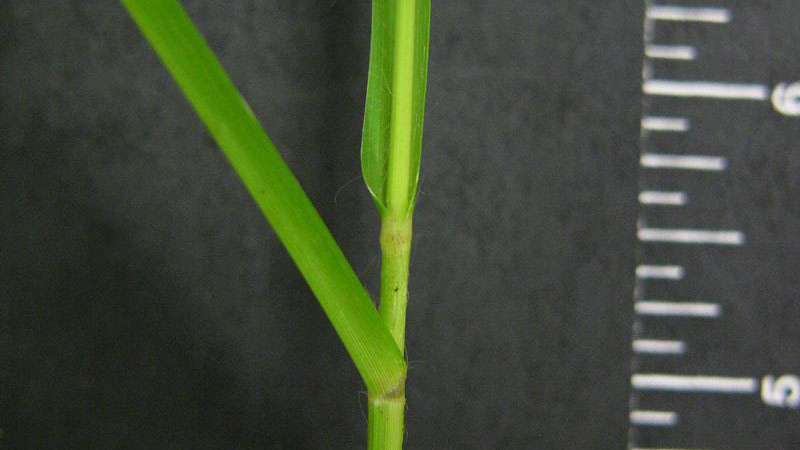

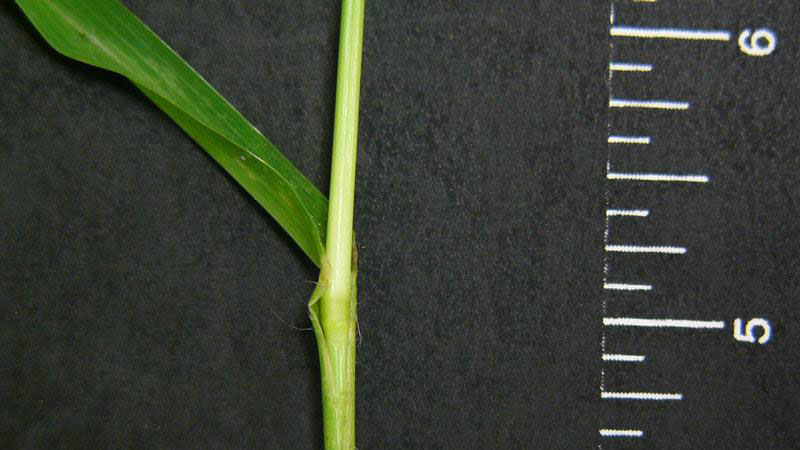
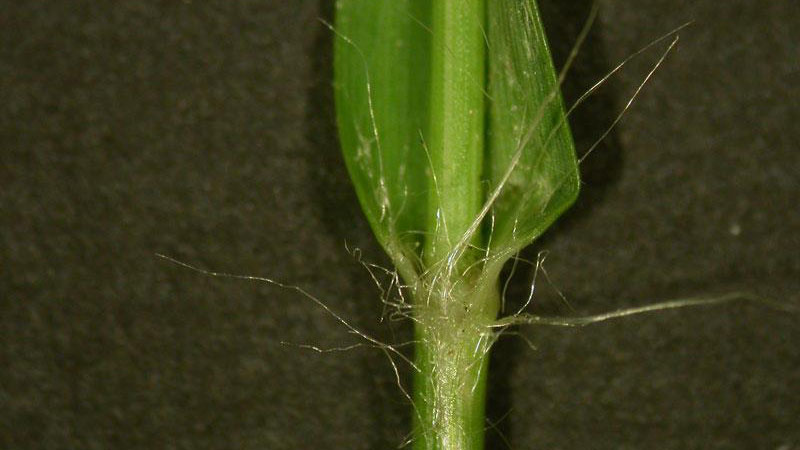

This Extension publication can also be viewed at: https://content.ces.ncsu.edu/goosegrass