Description
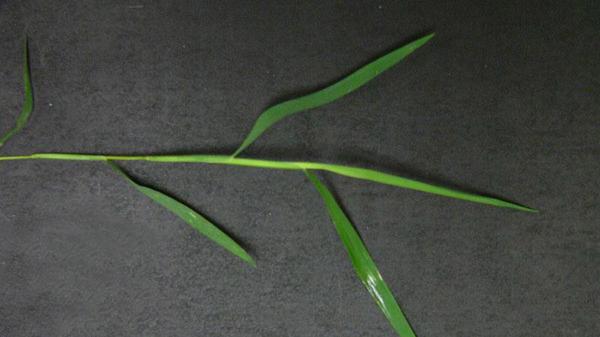
Nimblewill (Muhlenbergia schreberi) is a dense perennial weed of turfgrass. It is often found at field edges and in forest openings, especially in shaded areas with adequate moisture. Nimblewill grows in a very dense mat, and will root at the nodes. It has very slender, thin leaves, which can be confused with bermudagrass. However, nimblewill has a membranous ligule, which can be distinguished from the hairy ligule of bermudagrass.
Cultural Control
Perennial grass weeds are not desirable as turfgrass species under any conditions. Therefore, every effort should be made to prevent these weedy grasses from becoming established in turf, as selective control measures are usually difficult. Selection of adapted turfgrass species and cultivars and the use of cultural practices are important in minimizing weedy grass encroachment and competition. Management practices include: (1) mowing at the recommended height for the selected turfgrass and removing clippings when seedheads of grassy weeds are present; (2) applying the proper amount of nitrogen at the correct time according to the turfgrass present; and (3) using soil tests to determine needed nutrients and lime.
Species Data
- SEEDHEAD / FLOWER
- seedhead is a spike-like panicle, each spike contains a single seed with a long awn (bristle)
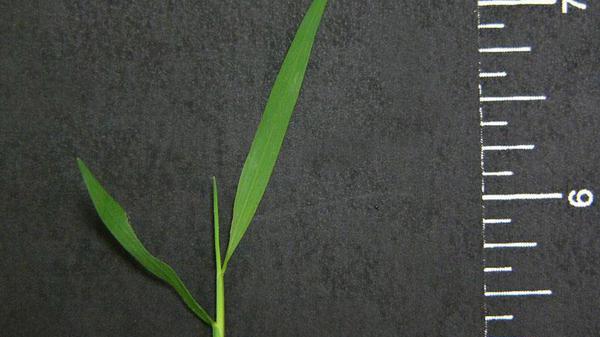
- VERNATION TYPE
- leaves rolled in the bud
Figure 1
- leaves rolled in the bud
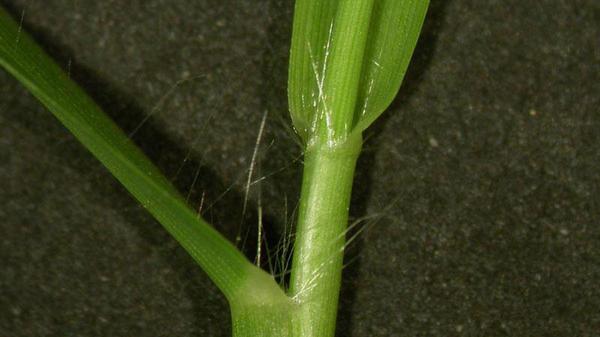
- LIGULE TYPE
- membranous; minute, irregular edge, less than 0.02 inches (0.5 mm) long
Figure 2
- membranous; minute, irregular edge, less than 0.02 inches (0.5 mm) long
- GROWTH SEASON / LIFE CYCLE
- perennial weed
- AURICLE TYPE
- absent
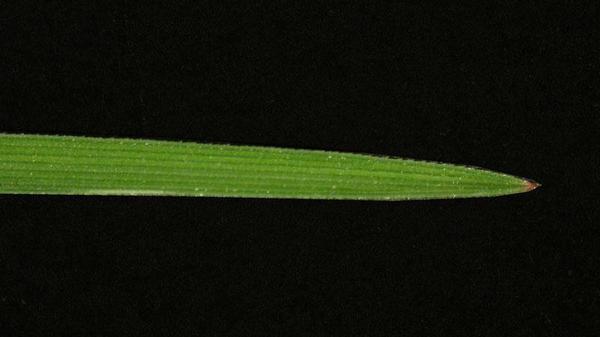
- LEAF BLADE TIP SHAPE
- LEAF BLADE WIDTH
- 0.08 - 0.1 inches (2 - 2.5 mm) wide
- STOLON PRESENCE
- present; fine
- RHIZOME PRESENCE
- present
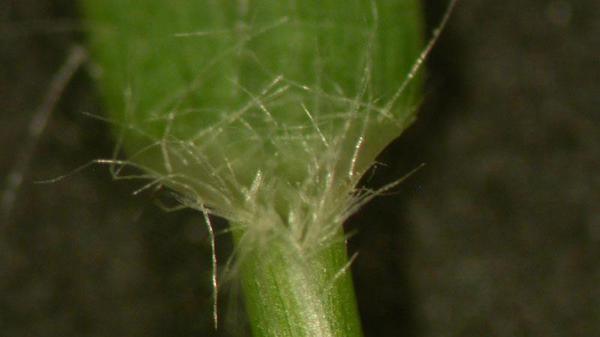
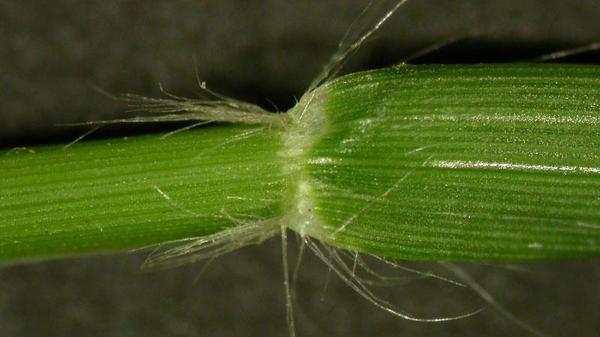
- COLLAR TYPE
- continuous; hairy on edges
Figure 6
- continuous; hairy on edges
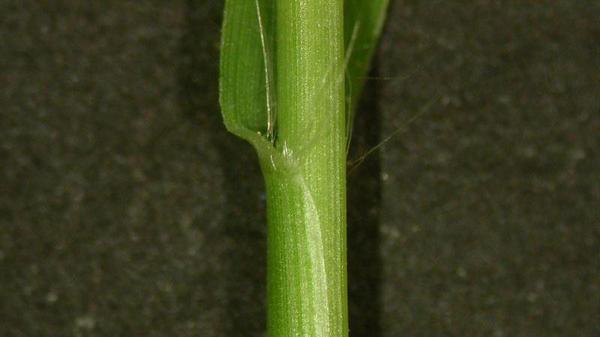
- SHEATH MARGIN
- open; usually a few long hairs on upper edges and near throat
Figure 7
- open; usually a few long hairs on upper edges and near throat
- SHEATH TYPE
- flattened; sheath is smooth, shorter than internode
This Extension publication can also be viewed at: https://content.ces.ncsu.edu/nimblewill